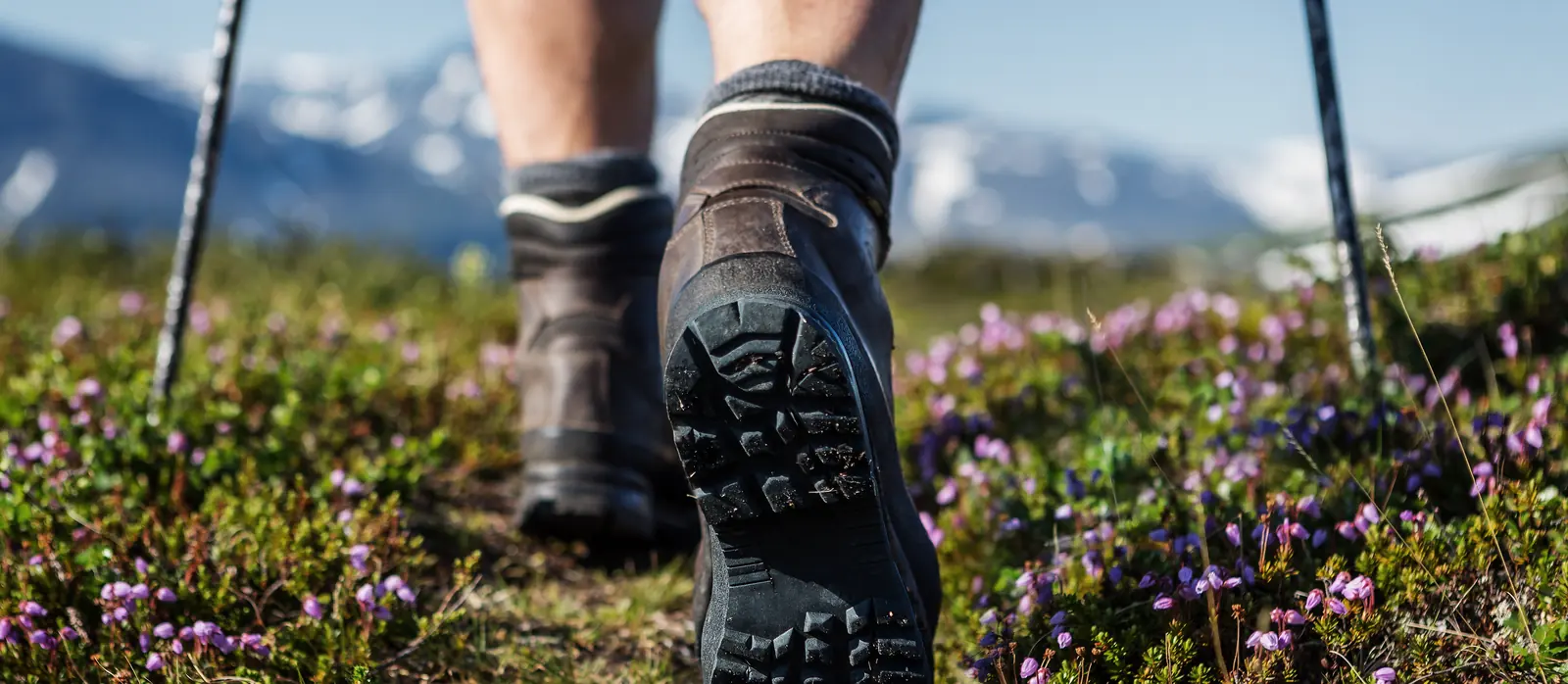
Gear & packing lists
The right gear is the basis for safe and relaxed hikes. Here you will find practical tips and a simple packing list for your next tour.
With the right gear you are more comfortable and safer on the trail. A well thought-out packing list helps you take the most important things without putting unnecessary weight into your rucksack.
Chapter 1: Basic gear
You do not need complicated gear for a day hike. What matters is that shoes, clothing, rucksack and food suit the tour and the weather. Trekking poles can additionally provide more stability, comfort and safety.
- Hiking shoes – Well-fitting hiking shoes give a secure hold and protect your feet on different surfaces.
- Clothing – Weather-appropriate clothing protects against wind, cold and rain and can be flexibly adapted to changing conditions.
- Rucksack – A light, well-fitting rucksack offers space for water, food, a rain jacket and important small items.
- Water & food – Enough water and small snacks help you stay focused and capable, even on longer tours.
- Trekking poles – Depending on the tour, trekking poles can provide more stability and relieve knees and joints. To our trekking poles
Packing list for day hikes
With a simple packing list you keep track and have the most important things with you. Depending on weather, season and tour, additional items of gear can make sense.
Chapter 3: Additional gear
Depending on the tour, weather and season, additional gear can be useful. Not everything is always necessary – but some small items can be very helpful on the trail.
Power bank
Keeps your smartphone or GPS device ready to use, even on longer tours.
Head torch
Helpful if a tour unexpectedly takes longer or you are out at dusk.
Rain cover
Keeps your rucksack and its contents dry in the rain.
First-aid kit
Takes up little space and can be valuable help in an emergency.
Rubbish bag
Take your rubbish back with you and help keep hiking trails and nature clean.
Chapter 4: Before the hike
With a little preparation you start your hike more relaxed and can avoid unpleasant surprises on the trail.
Check the weather – Check the forecast and adapt clothing, gear and route.
Plan the route – Check distance, ascent, difficulty and walking time in advance.
Charge your battery – Fully charge your smartphone or GPS and take a power bank if needed.
Inform family or friends – On longer or remote tours, tell someone you trust about your route and planned return.
Frequently asked questions
Short answers about gear and packing lists.
What gear do I need for a day hike?
Hiking shoes, weather-appropriate clothing, a rucksack, enough water, food and a charged smartphone. Depending on the tour, trekking poles and further gear can be useful.
How big should my rucksack be?
For most day hikes a rucksack with a volume of around 20–30 litres is enough.
How much water should I take?
That depends on the tour, weather, duration and your needs. It is better to plan a little extra – especially on warm days.
Do I need trekking poles?
Not necessarily. However, trekking poles provide more stability and relieve the joints – especially on longer or more demanding tours.
What should I consider in changeable weather?
Weather-appropriate clothing in layers and a light rain jacket belong in your rucksack. Check the forecast before you set off.
Do I have to take a first-aid kit?
A small first-aid kit should not be missing on any hike. It takes up little space and can be valuable help in an emergency.
Discover BERGBOUND products
Looking for reliable outdoor gear for your next hike? Discover functional products by BERGBOUND – developed with a focus on quality, reliability and durability.
Questions? We are happy to help.
Do you have questions about our products or about BERGBOUND? Simply send us an email – we look forward to your message and will reply as soon as possible.